
When Pain Doesn’t Switch Off Properly
Part II
So now we arrive at the part that tends to confuse — and sometimes frustrate — many people the most: “If the tissues have healed… why do I still have pain?”
And honestly, that is one of the most important questions in pain science.
Most people understand acute pain reasonably well. Twist your ankle, strain your back, hit your shin against the coffee table during a midnight bathroom trip — pain appears, the body heals, symptoms settle, and life moves on. Very easy and straightforward to understand. That is acute pain doing exactly what it was designed to do: protect you while tissues recover.
But persistent pain is different. Sometimes the tissues heal, yet the pain remains. For many common injuries and musculoskeletal problems, the normal tissue healing process usually happens somewhere within the first few weeks to a few months.
So if pain continues well beyond the 3–6 month mark, there is a good chance that the pain experience is now being influenced less by ongoing tissue damage itself and more by changes within the nervous system, stress levels, fear around movement, lifestyle factors, sleep quality, and pain sensitivity — all of which we are about to explore.
Now, before somebody angrily emails me saying:“ Daniel, my tendon definitely took longer than three months to heal,” You are absolutely correct.
There are obvious exceptions to this. Certain tendons, ligaments, discs, nerves, fractures, post-surgical tissues, and more complex injuries can genuinely require much longer healing timelines. The human body unfortunately did not receive a universal instruction manual at birth.
But for many people living with persistent pain, especially when symptoms continue for months or years, the nervous system itself often becomes a much bigger part of the story than the original tissue injury alone. And this is usually the point where people understandably become frightened, frustrated, exhausted, or convinced something serious has been “missed.”
The reality, however, is often far less dramatic — even if the pain itself feels very real. Persistent pain is usually less about ongoing tissue damage and more about a nervous system that has become hypersensitive and overprotective.
Think again about the smoke alarm analogy.
Acute pain is the alarm reacting appropriately to an actual fire. Persistent pain is the alarm continuing to scream long after the fire has been extinguished because the system has become too sensitive.
Annoying? Absolutely. Draining? Often. Dangerous? Highly unlikely.
When pain persists for months, the nervous system can essentially become better at producing pain. Yes! I know how it sounds, but it’s true. Your brain becomes better at producing …..pain.. The spinal cord amplifies signals more easily. The brain becomes quicker to interpret sensations as danger. Normal movements, touch, stress, poor sleep, emotions, or even anticipation of movement can begin triggering the alarm ( which is converted as a sensation of pain). This process is known as sensitisation. And importantly: it does not mean the pain is imaginary. The pain is completely real!
It simply means the nervous system has become extremely efficient at protecting you — even when the original tissues themselves are no longer seriously injured.
This is why persistent pain can sometimes feel deeply confusing. Scans may look relatively “normal,” or findings may not fully explain the severity of symptoms people experience.
And honestly, I have spent a surprising amount of time helping patients understand that their MRI report is not a prophecy about the future of their spine. Many scan findings are common age-related changes rather than evidence that the body is permanently damaged.
The brain sometimes starts protecting the idea of danger rather than actual danger itself. And strangely enough, this is also where the hopeful part begins.
Because if the nervous system can learn pain, it can also learn safety again.
The brain is adaptable. The nervous system changes constantly based on experiences, behaviours, movement, emotions, stress, confidence, and environment. This ability is called neuroplasticity — and it is one of the main reasons people can recover even after years of persistent pain.
Recovery is rarely about aggressively “fixing” tissues. Hence perhaps my strong opinion about passive treatments in one of my previous blog about chronic back pain.
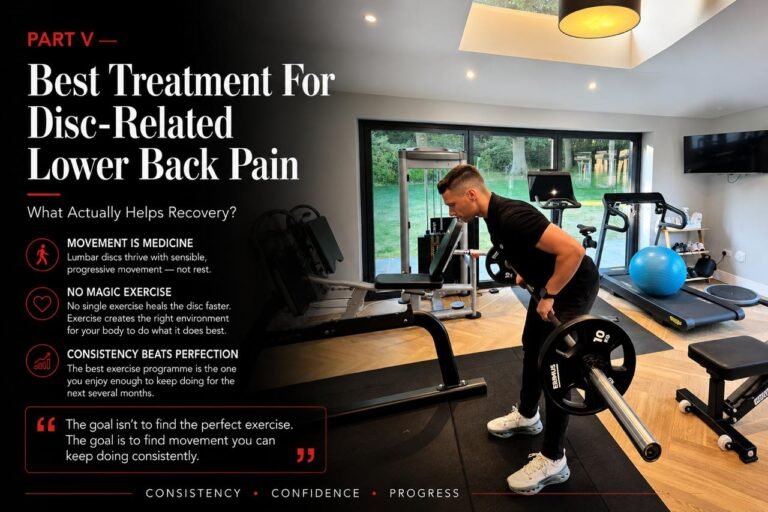
More often, it involves gradually retraining the nervous system through movement, reassurance, education, consistency, improved sleep, reduced fear, strength-building, and rebuilding confidence in the body again. Bit by bit, the alarm system starts calming down.
Persistent pain recovery is rarely about fighting your body. It is usually about teaching your body that it is safe again. Safe to move in a certain way, safe to lift a certain weight from the floor, safe to put socks again or to sneeze again. Safe to relax your core when moving, pushing and pulling.
That takes patience. Consistency. Understanding.
And occasionally resisting the urge to diagnose yourself online after midnight.
One of the most important things I try to explain to patients is this: Persistent pain does not automatically mean persistent damage. Your body is not weak. Your nervous system is not broken. And your pain is not imaginary!
Your system has simply become a little too protective. And the good news is: protective systems can be retrained!
If you are currently struggling with ongoing pain — whether it is your back, neck, shoulder, knee, or simply pain that no longer makes sense to you — proper guidance, reassurance, education, and a structured rehabilitation approach can genuinely make an enormous difference.
This type of recovery is rarely about quick fixes or miracle treatments. More often, it is about understanding your pain properly, rebuilding trust in your body, and having the right guidance and reassurance throughout the process — which is exactly where physiotherapy can play such an important role.
Sometimes having somebody properly assess your symptoms, explain what is happening, and guide you gradually back toward confidence and movement again can make all the difference.